
Posted By Rob Whalley
Beyond the Register: Modern Asset Management for Smarter Estates
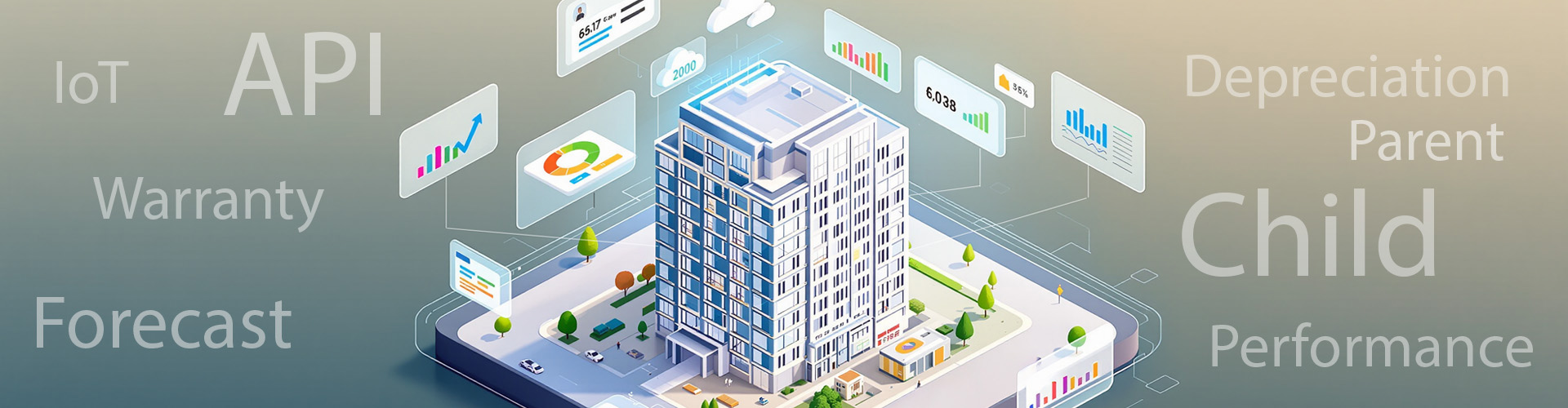
Effective asset management is no longer just about listing equipment. Today’s estates, facilities, and operational teams need complete visibility of every asset’s location, performance, lifecycle, cost, and compliance status — all connected through intelligent data.
Whether managing a multi-site estate, plant and machinery, or specialist equipment, a modern CAFM/CMMS platform elevates asset management from a reactive exercise to a strategic capability.
This article explores the key components of modern asset management — including GIS mapping, cost tracking, depreciation forecasting, safety controls, IoT integration, and parent–child hierarchy management.
1. Building a Strong Asset Register
A well-structured asset register is the foundation of effective asset management. Modern systems allow organisations to record:
- Asset categories and types
- Locations, rooms, and zones
- Serial numbers, model details, and specifications
- Warranty periods and service agreements
- Compliance documents and linked maintenance schedules
- Associated risks, manuals, and drawings
A complete register ensures that asset data is accurate and in readiness for auditing.
2. Visual Location Intelligence with GIS Mapping
Understanding the physical context of assets is vital. GIS mapping adds a spatial dimension by plotting assets on interactive maps accessible via desktop or mobile apps.
GIS supports:
- Rapid identification during reactive or planned tasks
- Improved navigation for mobile engineers
- Targeted inspections by zone or site
- Layering of utilities, routes, hazards, and service boundaries
- Visual insight into asset clustering and distribution
GIS bridges the gap between digital data and real-world geography.
3. Parent–Child Asset Relationships
Assets rarely exist in isolation. Many are part of systems or assemblies — a boiler plant, an AHU, or a control circuit. Capturing parent–child hierarchies clarifies how assets interact and depend on each other.
Examples include:
- Air handling units (fans, filters, motors, sensors)
- Boiler systems (pumps, burners, valves, controllers)
- Electrical panels (distribution boards, linked circuits)
- Laboratory instruments (removable or calibrated components)
This structure supports:
- Accurate maintenance scheduling for both systems and components
- Better fault diagnosis and impact analysis
- Budgeting and replacement forecasting (part vs. system)
- Reporting on system-level performance
Parent–child hierarchies help organisations move beyond flat asset lists to meaningful, relational data.
4. Tracking Asset Expenditure and Lifecycle Costs
Modern CAFM systems consolidate all cost data to provide a complete view of total cost of ownership, including:
- Labour time and callout charges
- Parts, materials, and consumables
- Reactive and planned maintenance costs
- Energy consumption and operational inefficiencies
This transparency helps identify high-cost assets, justify replacements, and support long-term financial planning.
5. Depreciation and Replacement Forecasting
Every asset loses value and efficiency over time. CAFM platforms can automate depreciation and replacement planning through:
- Straight-line or reducing-balance models
- Remaining useful life calculations
- Replacement cost forecasting
- End-of-life alerts
- Capital investment projections
Such proactive insights reduce emergency failures and support long-term asset renewal strategies.
6. Asset Warranty Management
By recording warranty details and service agreements, organisations can:
- Avoid unnecessary contractor callouts and associated costs
- Access repair or replacement entitlements quickly
- Maintain full service and inspection history
Centralised warranty management ensures traceability and cost efficiency across the asset lifecycle.
7. Data-Driven Maintenance and Strategy
When GIS data, costs, warranties, and hierarchies are connected in a single CAFM system, asset management becomes a strategic driver of efficiency.
This integration enables:
- Predictive and proactive maintenance
- Faster fault diagnosis
- Reduced downtime and risk
- Improved PPM scheduling
- Data-driven investment decisions
- Enhanced safety and compliance
The richer the dataset, the smarter the decisions.
8. LOTO Procedures and Asset Safety Instructions
Safety is paramount when managing mechanical or electrical assets. Embedding Lockout/Tagout (LOTO) procedures within a CAFM system ensures maintenance tasks are performed safely and consistently.
CAFM systems should record and make available:
- Asset-specific LOTO steps and isolation points
- Risk assessments and method statements (RAMS)
- PPE requirements and safety documentation
- Permits to Work linked to job types
- Manufacturer manuals and hazard information
Integrating safety instructions directly into work orders ensures engineers have access to the correct information before starting work — reducing accidents and ensuring compliance.
9. IoT Integration and Sensor-Driven Asset Monitoring
IoT (Internet of Things) technology is revolutionising asset management by connecting equipment to real-time data.
IoT integration supports:
- Real-time condition monitoring (temperature, vibration, humidity, pressure, energy use)
- Predictive maintenance, where sensors trigger alerts before failures occur
- Automatic work order generation when thresholds are breached
- Improved OEE accuracy through live performance data
- Energy optimisation and sustainability reporting
For high-value or high-risk equipment, IoT sensors provide 24/7 visibility, feeding live data into the CAFM system to enable predictive maintenance, extended asset life, and reduced unplanned downtime.
Conclusion
Modern asset management is far more than maintaining an inventory — it’s about turning data into strategic insight.
By combining GIS mapping, parent–child hierarchies, lifecycle costing, warranties, OEE analysis, safety controls like
LOTO, and IoT-driven monitoring, organisations can achieve:
- Full visibility of asset condition and performance
- Improved safety and compliance
- Lower operational costs and reduced downtime
- Informed investment and replacement planning
- A proactive, predictive maintenance culture
When all asset data converges into a single CAFM platform, estates and facilities teams gain the clarity and control needed to manage their assets with confidence, efficiency, and foresight.
Ready to start your asset journey? If so, please contact sales@tabsfm.com

























Follow us:
GDPR (Data Privacy)
Disclaimer
COVID-19